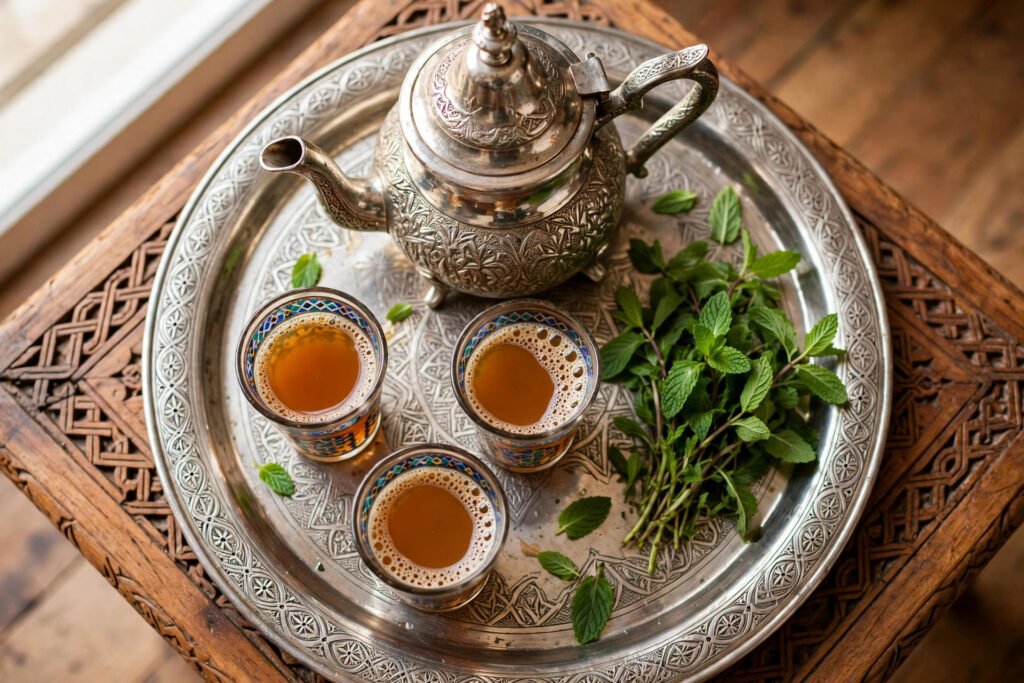
In Morocco, tea is not a drink. It’s a greeting, a pause, a negotiation, a celebration — sometimes all four before lunch. Moroccan mint tea, called atay, is poured for arriving guests, after meals, and in shops mid-bargain. Refusing a glass is almost unthinkable; accepting a second is expected.
The method is specific and worth learning properly. Chinese gunpowder green tea is rinsed — twice, for reasons that matter — then simmered with sugar, flooded with fresh spearmint, and poured from a height so it lands in small decorated glasses crowned with foam. That foam, called rghba, is the signature of a well-made pot. Get the ritual right and a handful of ingredients becomes something genuinely greater than its parts.
A pot of atay is also the natural ending to a Moroccan feast — after a celebratory dish like chicken bastilla, there is always tea. Here’s how to make it the way Moroccan hosts do.

Moroccan Mint Tea
Ingredients
Method
- Boil the water. Bring the 4 cups of water to a full rolling boil in a kettle.
- First rinse — keep this water. Put the tea in your teapot (a Moroccan berrad is traditional; any sturdy teapot or small saucepan with a lid works). Pour over about ½ cup of the boiling water, let it sit 1 minute, then swirl and pour all of that water into a glass and set it aside. This first rinse holds the tea’s best flavor — its “spirit” — and Moroccan tea makers never throw it away.
- Second rinse — discard this one. Add another ½ cup of boiling water to the leaves, swirl for 10–15 seconds, and pour it out and discard it. This wash removes dust and the harshest bitter notes.
- Simmer the tea. Return the reserved first-rinse water to the pot, add the remaining water and the sugar, and bring to a gentle boil over medium heat. Let it simmer for 2–3 minutes, until the leaves have opened fully and the tea is a deep amber-green.
- Add the mint. Rinse the mint, shake it dry, and tuck the whole bunch into the pot, stems and all. Let the pot come back to a brief boil — just until it foams up — then take it off the heat immediately. Boiling mint for more than a few seconds turns it dark and bitter.
- Mix by pouring. This replaces stirring. Pour a glass of tea from the pot, then pour it back in. Repeat 2–3 times. It blends the sugar and mint evenly and starts building the foam.
- Serve with a high pour. Hold the teapot a good 8–12 inches above each small glass and pour in a thin stream, filling the glasses about two-thirds full. The height aerates the tea, cools it slightly, mixes it one last time, and raises the foam that marks a properly made pot. Serve at once, ideally with something to nibble — a plate of msemen, Morocco’s flaky layered flatbread, is a classic afternoon pairing.
Notes
Ingredient notes
Gunpowder green tea is the only tea for this. It’s a Chinese green tea rolled into tight little pellets — the pellets are said to resemble old-fashioned gunpowder, hence the name — that unfurl as they steep and give atay its brisk, slightly smoky backbone. Look for it in Asian markets, tea shops, and online; Temple of Heaven is a widely available, reliable brand. The mint must be spearmint — fresh, bright, and fragrant — not peppermint, which tastes like toothpaste by comparison. On sugar: Moroccan tea is traditionally sweet, genuinely sweet. A quarter cup for a pot this size is a moderate, home-style amount; many families use more. Start here, taste, and adjust. The tea will taste wrong if you skip sugar entirely — it balances the green tea’s bitterness structurally, not just with sweetness.
Tips for Tea Like a Moroccan Host
- Never skip the rinses. Gunpowder tea that goes straight into the pot tastes harsh and dusty. The two-stage rinse — keep the first, discard the second — is the single biggest difference between flat tea and real atay.
- Protect the first rinse. That reserved glass is where the flavor lives. Tea made by discarding the first pour tastes thin — and Moroccans can tell.
- Mint goes in last, and barely cooks. The pot should come off the heat the moment it returns to a boil. Steeping off the heat for 2–3 minutes is plenty; cooked mint loses its perfume and turns the tea muddy.
- Pour high, every time. It’s not theater — the long pour oxidizes and aerates the tea, which rounds its flavor, and it creates the foam crown. Low-poured tea with no foam will be noticed.
- Adjust sweetness in the pot, not the glass. Sugar stirred into individual glasses never dissolves or distributes properly. If the pot needs more, add it before the final mixing pours and taste again.
Storage & Reheating
- Tea is a fresh drink. Atay is at its best within the hour it’s made — make it fresh rather than storing a batch.
- Short-term leftovers: Strain out the mint (it darkens and turns bitter as it sits) and refrigerate the tea for up to 1 day.
- Reheating: Warm gently on the stovetop until just steaming — don’t boil it again — and pour from a height to revive a little foam. Or chill it thoroughly and serve over ice as a refreshing iced mint tea, with a fresh mint sprig in each glass.
FAQ
Why is it called gunpowder tea?
Because of how it looks dry: each leaf is rolled tightly into a small, dark pellet that resembles grains of gunpowder. The rolling protects the tea on long journeys — which is how a Chinese tea became the foundation of Morocco’s national drink in the first place.
Does Moroccan mint tea have caffeine?
Yes. It’s real green tea, so each small glass carries a moderate amount of caffeine. The glasses are small, but Moroccans drink several, so keep that in mind in the evening.
Can I make it with less sugar, or none?
You can reduce the sugar to 2–3 tablespoons and still have recognizable atay, though it will be more bitter and less rounded. Completely unsweetened is not traditional and honestly not very pleasant with gunpowder tea’s assertive character — if you need to cut sweetness, a smaller reduction plus extra mint is the better compromise.
I don’t have a Moroccan teapot. What can I use?
Any teapot that can sit on the stove, or a small saucepan with a lid and a good pouring spout, works fine. The berrad’s tall shape helps with the high pour, but technique matters more than equipment.