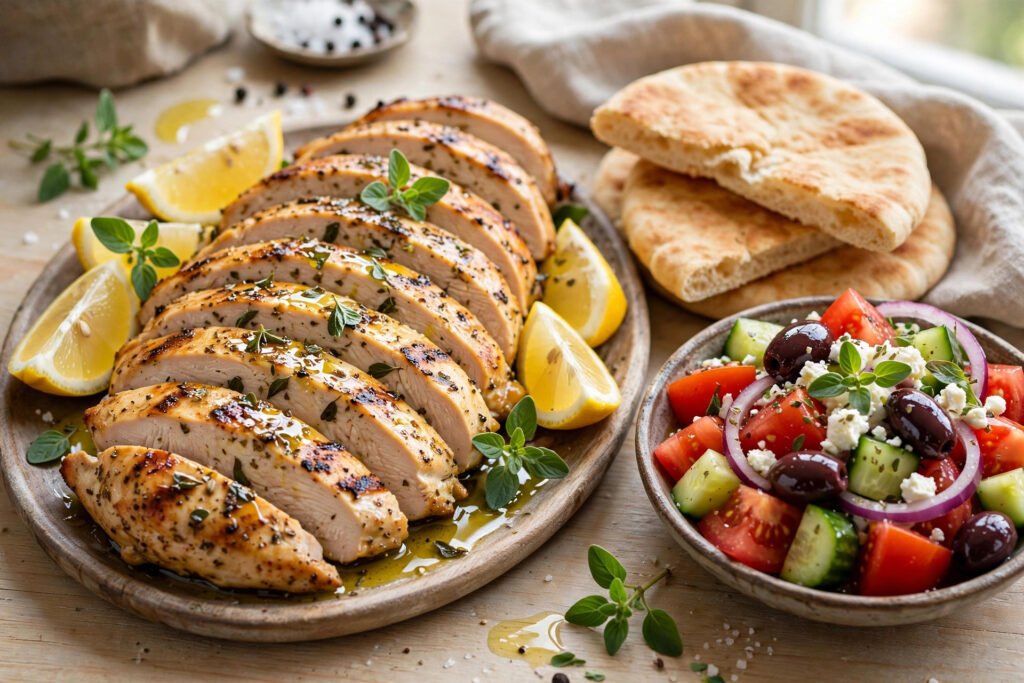
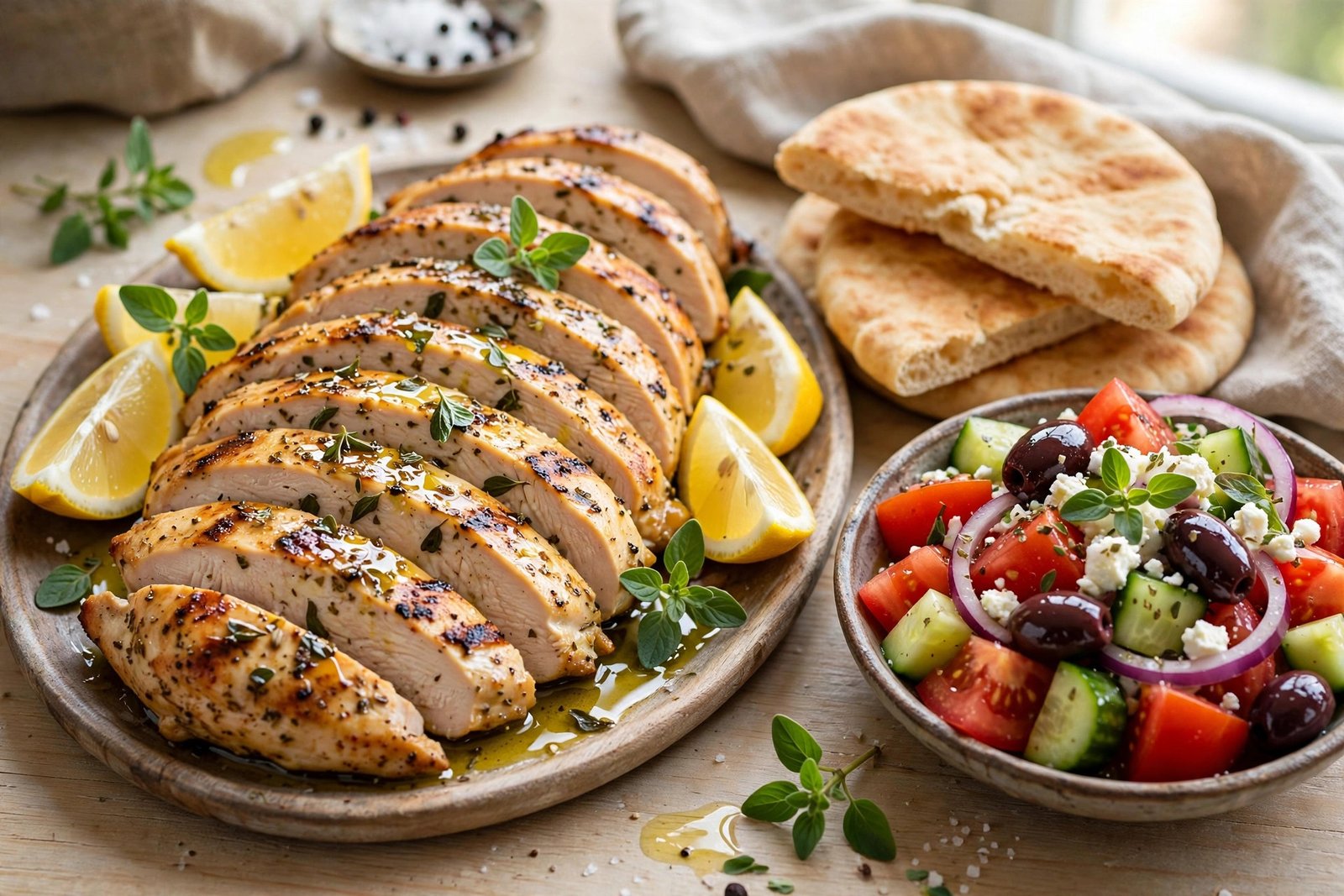
This is the marinade behind every great Greek chicken: fruity olive oil, lots of fresh lemon, plenty of garlic, and a heavy hand with oregano. It’s the formula tavernas have used for generations, and it turns plain chicken breasts or thighs bright, savory, and genuinely juicy — grilled, baked, or seared in a skillet.
Why it works: every ingredient has a job. The olive oil carries flavor and keeps the surface moist, the lemon brightens and gently tenderizes, the salt seasons the meat all the way through, and the oregano and garlic deliver that unmistakable Greek flavor. The one rule is timing — lemon is powerful, and this marinade has a sweet spot.
Keep it in your back pocket for weeknights: a 10-minute whisk that loves meal prep and, like our sheet pan chicken fajitas, makes Tuesday dinner feel handled. Serve the chicken sliced over rice or a Greek salad, tucked into warm pita with tomato and red onion, or next to roasted potatoes.
Greek Chicken Marinade
Ingredients
Method
- Whisk the marinade. In a medium bowl or large measuring cup, whisk together the olive oil, lemon juice and zest, garlic, oregano, Dijon, salt, pepper, and any paprika or pepper flakes until unified and slightly thickened.
- Reserve a little for serving (optional). For a fresh finishing drizzle, spoon out 2 tablespoons now — before the marinade touches any raw chicken — and refrigerate it.
- Marinate the chicken. Place the chicken in a zip-top bag or shallow dish, pour the marinade over, and turn to coat. Refrigerate at least 30 minutes and up to 4 hours (breasts can go to 8 hours; thighs are more forgiving).
- Dry the surface. Remove the chicken 15–20 minutes before cooking. Let the excess marinade drip off and pat the surface lightly with paper towels — a drier surface browns far better. Discard the used marinade.
- Cook, your way. Use whichever method fits your night: Grill: Medium-high heat (about 425°F), 6–8 minutes per side for breasts, 7–9 for thighs, until the thickest part reads 165°F. Oven: 425°F for 18–22 minutes for breasts (15–18 for thighs), until 165°F. Skillet: Medium-high heat with a film of oil, 6–7 minutes per side for breasts, until golden and 165°F. Air fryer: 390°F for 16–20 minutes, flipping halfway — use the doneness checks in our air fryer chicken breast guide.
- Rest, slice, and finish. Rest the chicken 5–10 minutes so the juices redistribute, then slice against the grain. Spoon over the reserved marinade or fresh lemon juice, shower with oregano, and serve.
Notes
Ingredient notes
Fresh lemon juice matters here. Bottled juice tastes flat and harsh by comparison, and the zest — where most of the lemon’s aromatic oils live — only comes from a real lemon. Zest the lemons before you juice them; it’s nearly impossible afterward. Dried oregano is the classic choice, not a compromise: Greek oregano dries beautifully and stands up to grilling. (Fresh works too: 2 tablespoons, chopped.) Grate the garlic into a paste — it coats evenly instead of sitting in chunks that burn. And the Dijon mustard, our one non-traditional touch, emulsifies the oil and lemon so the marinade clings instead of pooling underneath.
Tips for the Juiciest Greek Chicken
- Respect the acid clock. Lemon tenderizes at first, then turns on you: past about 8 hours in a citrus marinade, chicken breasts develop a chalky, mushy surface. Thirty minutes gives real flavor, 2–4 hours is the sweet spot — and for anything longer, freeze the chicken in the marinade (see Storage & Reheating).
- Pound or pick even pieces. Uneven breasts cook unevenly no matter how good the marinade is. Pound the thick end to an even ¾ inch, or butterfly thick breasts in half. Thighs are naturally more forgiving.
- Don’t skip the rest. Cutting into chicken straight off the grill spills the juices you’re trying to keep. Five to ten minutes under loose foil is the difference between juicy and merely fine.
- Cook to temperature, not to time. Marinade color and char lines lie; a thermometer doesn’t. Cook to 165°F at the thickest part (160–162°F is fine with a good rest — carryover heat finishes it).
- Never reuse marinade that touched raw chicken. It carries raw chicken juices; it is not a sauce. Reserve your drizzle first (step 2), or boil used marinade hard for a full minute to use it as a glaze.
Storage & Reheating
- Refrigerator: Cooked chicken keeps in an airtight container for 3–4 days — slice it cold over salads and grain bowls all week. Unused marinade that never touched chicken keeps up to 1 week in a sealed jar.
- Freezer (the meal-prep move): Place raw chicken and marinade in a freezer bag, press out the air, and freeze for up to 3 months. It marinates as it thaws overnight in the fridge, so it’s ready to cook the next day. Cooked chicken also freezes well for 2–3 months.
- Reheating: Warm slices gently in a covered skillet over low heat with a splash of water, or in a 350°F oven, covered, for 10–12 minutes. Microwave only in 30-second bursts — lemon-marinated chicken dries out fast under aggressive reheating.
FAQ
How long should chicken marinate in Greek marinade?
At least 30 minutes for real flavor, with 2–4 hours as the sweet spot. Because the marinade is citrus-based, don’t leave chicken breasts in it beyond about 8 hours. Boneless thighs tolerate up to 12 hours. For anything longer, freeze the chicken in the marinade and let it marinate as it thaws.
Can I add Greek yogurt to this marinade?
Yes — it’s a beloved variation. Whisk in ¼ cup plain Greek yogurt for a souvlaki-style marinade that clings and tenderizes more gently; the yogurt buffers the lemon, so chicken can marinate up to 24 hours.
Does this marinade work for other proteins?
Absolutely. Excellent on pork chops (2–4 hours), salmon and other firm fish (20–30 minutes only), shrimp (15–20 minutes maximum — the acid will “cook” them ceviche-style if left longer), and skewer vegetables like zucchini, bell peppers, and red onions (30 minutes).
Can I use this as a salad dressing or sauce?
The fresh, unused marinade is basically a lemon-oregano vinaigrette — thin it with an extra splash of olive oil and it’s wonderful on a Greek salad. Just remember: only marinade that never touched raw chicken is safe to eat uncooked.