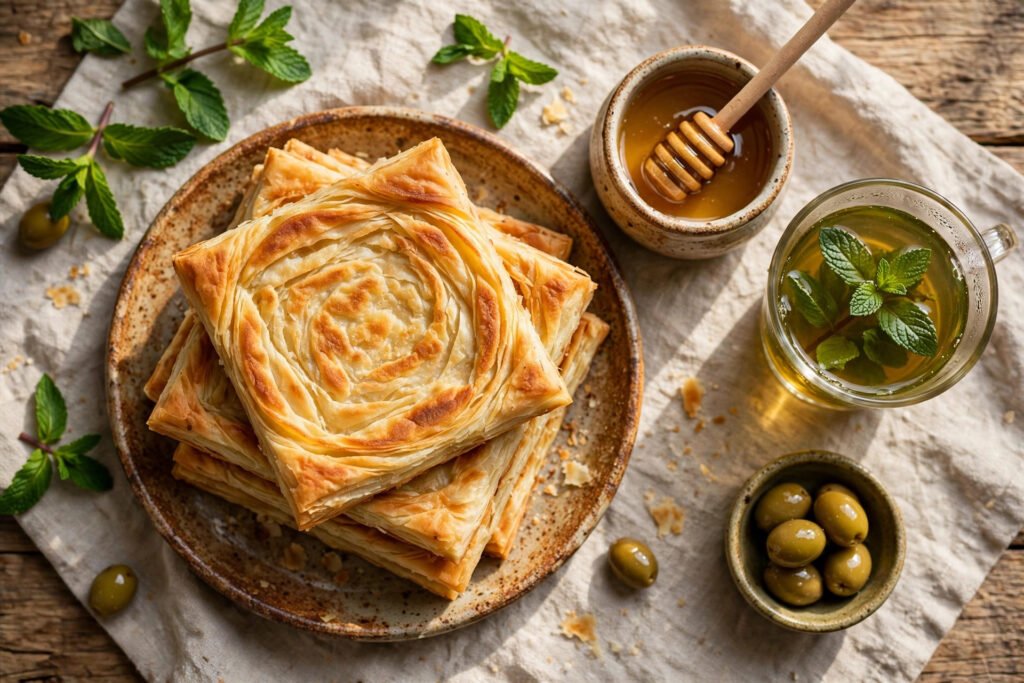
On a Moroccan morning, few smells beat msemen sizzling on a hot griddle. These square, layered flatbreads — made from a semolina dough stretched paper-thin, folded with oil between the layers, and pan-fried until golden — come off the pan supple and steaming, ready to be torn apart and dragged through honey, soft cheese, or a fried egg’s runny yolk. They’re breakfast, afternoon snack, and Ramadan staple.
Msemen (also called rghaif in some regions) looks impressive, but the dough is only a few pantry ingredients, and the technique is forgiving once you understand its one real rule: rest. A well-rested dough stretches to near-transparency without a fight; a rushed one tears and springs back.
The classic way to enjoy them is with a glass of Moroccan mint tea, a dish of honey or amlou, and a plate of olives. But don’t stop at breakfast — msemen are endlessly useful, from wrapping grilled meats to sopping up sauce. Learn this one recipe and you’ll make it for years.

Msemen
Ingredients
Method
- Make the dough. In a large bowl, whisk together the semolina, flour, salt, sugar, and yeast (if using). Pour in 1¼ cups warm water and mix into a shaggy dough, adding more water a spoonful at a time until it comes together. Knead 8–10 minutes (6–7 in a stand mixer) until smooth, elastic, and soft — it should feel like an earlobe and stretch without snapping.
- Rest and portion. Rub the dough with a little oil, cover, and rest 15 minutes. Then, with oiled hands, divide it into 8 pieces and roll each into a smooth ball. Arrange on an oiled tray, brush the tops with oil, cover with plastic wrap, and rest at least 20–30 minutes. This rest is non-negotiable — it’s what lets the dough stretch thin.
- Stretch the first square. On a well-oiled surface, flatten one ball with oiled fingertips, pushing and stretching it outward into a large, thin rectangle — roughly 12 × 10 inches and almost translucent. A small tear is fine; don’t chase perfection.
- Layer and fold. Drizzle the sheet with a little oil or butter and sprinkle lightly with fine semolina — this creates the separate, flaky layers. Fold the top third down and the bottom third up, like a letter. Drizzle and sprinkle again, then fold the two sides in to make a neat square of about 4 inches. Set aside and repeat with the remaining balls.
- Flatten the folded squares. When all the squares are folded, go back to the first one and flatten it gently to about 5–6 inches across. Keep the pressure even so the layers spread without bursting out the sides.
- Cook. Heat a cast-iron skillet or heavy pan over medium-high heat — no oil needed; the bread carries its own. Cook each msemen 2–3 minutes per side, pressing lightly and turning once or twice more, until golden with darker speckles and slightly puffed at the edges.
- Serve warm. Stack the msemen under a clean towel as they come off the pan to keep them supple. Serve with honey, jam, soft cheese, or olives.
Notes
Ingredient notes
Fine semolina is the key ingredient — it gives msemen its delicate chew and golden color. It must be the fine, powdery kind (often labeled “semolina flour” or durum flour); coarse semolina won’t stretch and will tear the dough. More semolina means more flavor and a slightly denser bread, more flour a softer stretch — the blend above is the classic middle ground. For shaping fat, many Moroccan cooks use a mixture of oil and melted butter for easy stretching and rich flavor; plain oil keeps them dairy-free. Use comfortably warm water, not hot, to help the dough relax.
Tips for Flaky, Tender Msemen Every Time
- Rest is the recipe. If the dough snaps back or tears while stretching, it isn’t a skill problem — it’s a rest problem. Cover it, walk away for 15 minutes, and try again. It will feel like a different dough.
- Oil everything. Your hands, the tray, the work surface, the dough balls. Msemen dough should never meet a dry surface, or it will stick and tear.
- The semolina sprinkle is the flakiness. Skipping it gives you a single thick pancake; that light dusting between folds is what separates the layers as the bread cooks and puffs.
- Stretch thin, but relax about holes. A sheet you can almost see through makes the most delicate msemen. Small holes disappear in the folds — nobody will ever know.
- Get the heat right. Too low and the msemen turn pale, dry, and leathery; too high and they scorch before the inside layers cook. Medium-high is the sweet spot.
Storage & Reheating
- Room temperature: Wrapped in a clean towel or bag, msemen keep for 1 day. They’re at their best within hours of cooking.
- Refrigerator: Store in a sealed bag for up to 4 days. The layers will firm up — reheating restores them.
- Freezer: Freeze for up to 2 months with parchment between the breads so they don’t fuse. Msemen freeze well — worth making a double batch.
- Reheating: Warm in a dry skillet over medium heat for about a minute per side, or in a 350°F oven for 4–5 minutes. Avoid the microwave if you can — it makes the layers tough and chewy.
FAQ
Why does my dough keep tearing when I stretch it?
Nine times out of ten, it needs more rest (or more kneading to build elasticity). Knead until truly smooth, rest the balls a full 30 minutes under oil and plastic, and stretch on an oiled surface. If a tear happens anyway, just fold it into the layers.
What’s the difference between msemen, rghaif, and meloui?
They’re cousins from the same dough family. Msemen are folded into squares; meloui are rolled into a spiral coil, then flattened into rounds; rghaif usually means stuffed msemen — filled with a spiced onion and tomato mixture before folding. All three are pan-fried the same way.
When are msemen traditionally served?
At breakfast with honey, cheese, and olives, and at afternoon tea. During Ramadan they appear at iftar alongside dates and a bowl of harira — the sweet-savory bread and the tangy tomato soup are a classic pairing.
Can I make the dough ahead of time?
Yes. The dough balls keep, well-oiled and covered, in the fridge for up to 24 hours. Bring them to room temperature for 30 minutes before stretching, so the dough relaxes again.