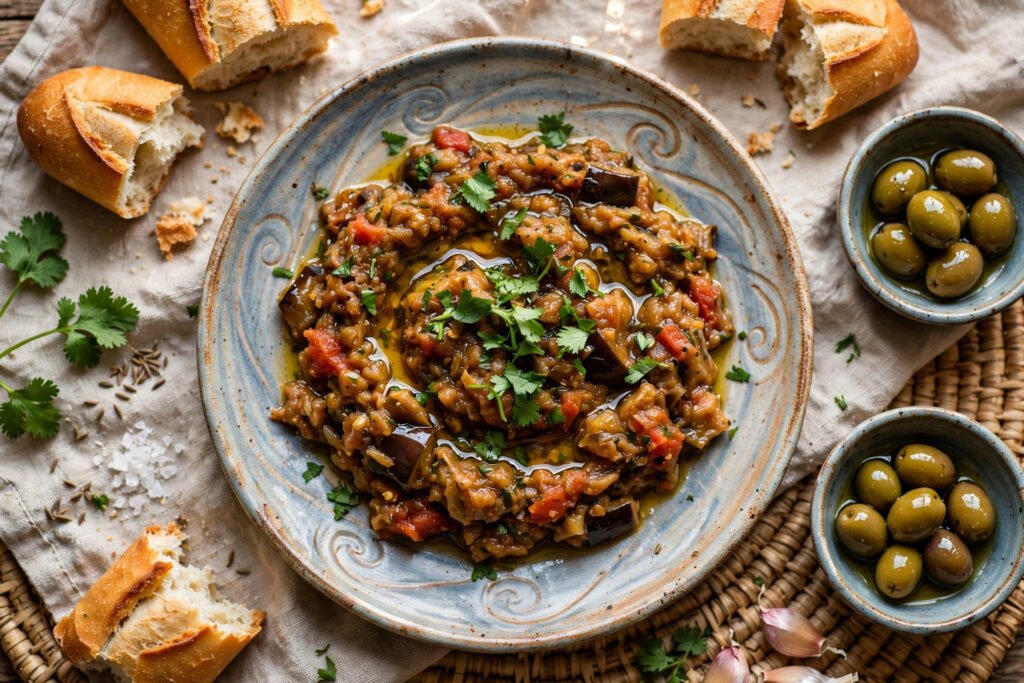
Ask a Moroccan cook what goes on the table before the main dish, and zaalouk will be among the first names you hear. It’s a cooked eggplant salad — eggplant and tomatoes simmered down in olive oil with garlic, paprika, and cumin until they collapse into something between a salad, a dip, and a relish. You scoop it up with torn pieces of bread, warm or at room temperature, and it’s often gone before the tagine even arrives.
Zaalouk belongs to the family of Moroccan cooked salads that open a meal, usually served in small plates alongside olives, marinated carrots, and taktouka. What sets it apart is the texture: completely soft, almost spreadable, with the smoky depth of well-cooked eggplant and a gentle warmth from the spices. It’s naturally vegan, deeply flavorful, and — like so many humble dishes — far better than the sum of its short ingredient list.
Serve it the way it appears on Moroccan tables: as one part of a spread with dishes like our Moroccan chicken tagine with preserved lemon & olives, or simply with bread and a drizzle of your best olive oil as a light lunch. However you serve it, make extra — it improves overnight and disappears fast.

Zaalouk
Ingredients
Method
- Roast the eggplants. Prick each eggplant a few times with a fork. Roast whole over a gas flame, under a hot broiler, or on a grill, turning occasionally, for 15–20 minutes until the skin is charred and blistered all over and the flesh is completely collapsed and soft. (A 425°F oven for 30–35 minutes also works — less smoke, still delicious.)
- Peel and drain. Let the eggplants cool until you can handle them, then split them open, scoop the flesh into a colander, and discard the skins. Let the flesh drain for 10 minutes, then chop it roughly. This draining step keeps the finished zaalouk thick instead of watery.
- Build the tomato base. While the eggplant drains, heat the olive oil in a large skillet or wide pot over medium heat. Add the garlic and cook 30 seconds, then add the tomatoes, paprika, cumin, chili, and salt. Cook, stirring often, for about 10 minutes, until the tomatoes have broken down into a thick sauce and the oil begins to separate at the edges.
- Add the eggplant and mash. Stir in the eggplant flesh. Using a fork or potato masher, mash the mixture right in the pan as it cooks — you want a coarse, jammy texture, not a smooth purée. Continue cooking for 12–15 minutes, stirring frequently, until the zaalouk is thick, darkened slightly, and the oil glistens on the surface.
- Finish and season. Stir in the chopped herbs and lemon juice or vinegar. Taste and adjust salt, heat, and acidity — it should be savory, warm, and bright at the edges. Take off the heat.
- Serve. Spoon into a shallow plate, swirl the top with the back of a spoon, and drizzle generously with raw olive oil. Serve warm or at room temperature, with plenty of bread for scooping.
Notes
Ingredient notes
Eggplants should be firm, heavy for their size, and glossy — those have fewer seeds and less bitterness. Globe eggplants are standard; Italian eggplants work beautifully too. The smoky flavor in this version comes from roasting the eggplants whole until they collapse; if you don’t want to roast, see the FAQ for the boiled version many Moroccan home cooks use. Tomatoes need to be ripe and flavorful — in winter, a 14-ounce can of good crushed tomatoes (San Marzano style) honestly beats pale fresh ones. The final drizzle of raw olive oil matters: use the best you have, because its flavor sits right on top of the finished dish.
Tips for Zaalouk with Real Moroccan Flavor
- Char the eggplant properly. Pale, steamed eggplant gives you a fine salad; flame-kissed eggplant gives you zaalouk. The char is where the signature smokiness lives.
- Cook it past “done.” Zaalouk should cook until the oil rises and the mixture looks thick and concentrated. If it’s pale and wet, keep going — those extra minutes are the whole dish.
- Mash, never blend. A food processor turns zaalouk into baby food. Mashing by hand leaves the strands and texture that make it satisfying to scoop.
- Balance at the very end. Salt, lemon, and chili can only be judged once everything has cooked down. Season, taste with a piece of bread (that’s how it will actually be eaten), and adjust.
- Make it ahead. Zaalouk is one of those rare dishes that is genuinely better the next day, once the garlic and spices have settled into the eggplant. Plan accordingly.
Storage & Reheating
- Refrigerator: Store in an airtight container for up to 5 days. The olive oil may solidify on top — that’s normal and actually protects the salad underneath.
- Freezer: Freeze for up to 2 months. The texture softens a little after thawing, but since zaalouk is soft to begin with, it freezes better than most eggplant dishes.
- Serving leftovers: Zaalouk is best at room temperature, so pull it from the fridge 30 minutes before serving. If you prefer it warm, heat gently in a skillet over low heat — avoid the microwave, which can make it watery.
FAQ
Is zaalouk served hot or cold?
Warm or at room temperature — never straight from the fridge. In Morocco it’s a cooked salad, served the way you’d serve a room-temperature antipasto, with bread alongside.
Can I make zaalouk without roasting the eggplant?
Yes — the other classic method is to peel the eggplants, cut them into large cubes, and boil or steam them for about 15 minutes until completely soft, then drain very well and proceed from step 3. The flavor will be milder and less smoky, but the dish is still unmistakably zaalouk.
How spicy is zaalouk supposed to be?
It should have warmth, not fire. Half a teaspoon of chili flakes gives a gentle background heat; Moroccans adjust it to the table. Add more if you like — or stir in a spoonful of harissa at the end for a smokier heat.
What do I serve zaalouk with?
Bread first — khobz or any crusty loaf for scooping. On a full Moroccan table it appears with olives and other salads before a main like our Moroccan kefta tagine with eggs. It’s also excellent spooned over grilled fish or folded into a warm sandwich.