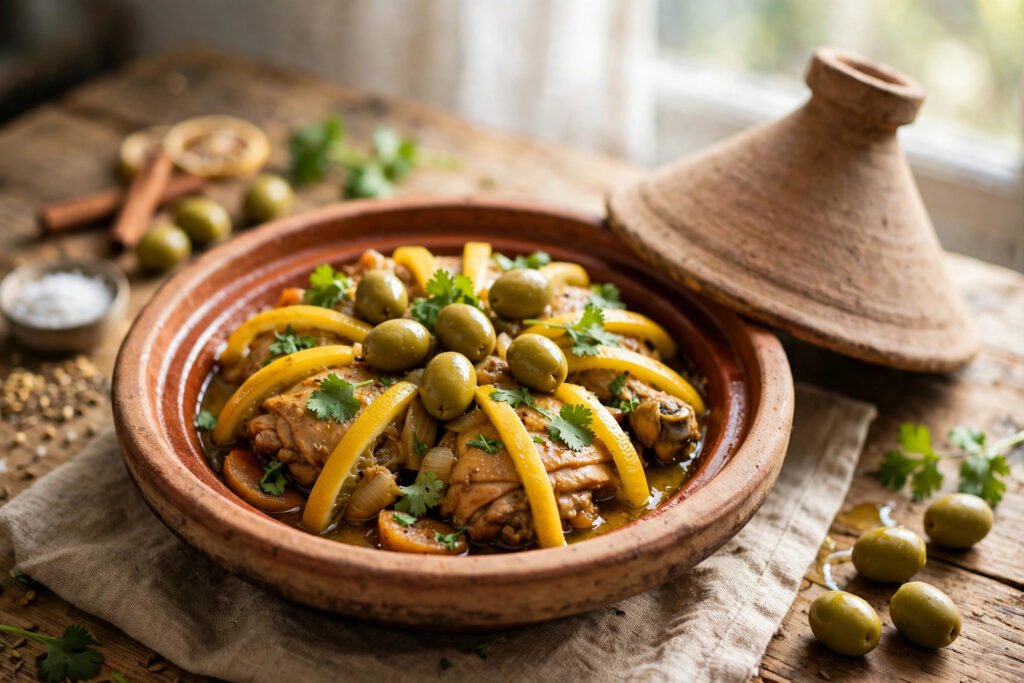
If there is one dish that tastes like a Moroccan home, this is it. Chicken slowly simmers in a golden onion sauce with ginger, turmeric, and a whisper of saffron, then gets finished with salty preserved lemon rind and briny green olives. It arrives at the table still bubbling in its dish, with crusty bread torn and passed around for scooping up every last spoonful of sauce.
This is the version made in Moroccan kitchens for family lunches and honored guests alike — and it’s more about patience than technique. The onion melts down into a rich, concentrated sauce, the chicken turns silky, and the preserved lemon does something no fresh lemon can: deep, mellow, almost floral saltiness that defines the dish.
You don’t need a clay tagine to make it. A Dutch oven or any heavy pot with a lid gives you the same result. What you do need is one special ingredient — preserved lemons — and we’ve included notes below on exactly where to find them in the US and what to do if you can’t.
Planning a full Moroccan spread? Serve this tagine with our Moroccan Couscous, and open the meal with a bowl of Harira — the soup that starts so many Moroccan dinners.
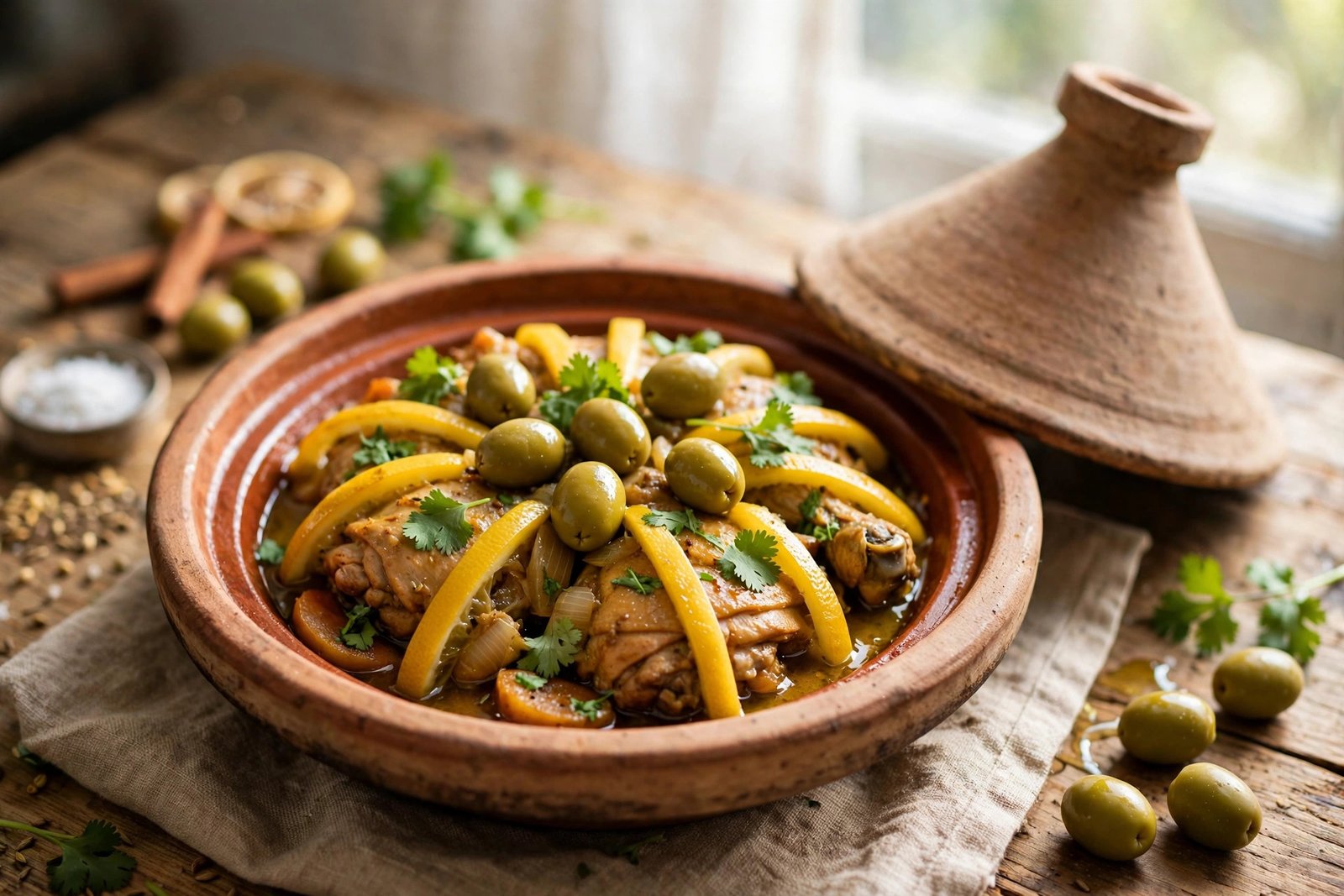
Moroccan Chicken Tagine with Preserved Lemon & Olives
Ingredients
Method
- Marinate the chicken: stir together the garlic, ginger, turmeric, pepper, salt, cinnamon, saffron and its soaking water, olive oil, chopped herbs, and lemon juice. Add the chicken and rub the mixture all over and under the skin. Cover and rest 30 minutes at room temperature, or refrigerate up to 2 hours.
- Build the onion base: spread the grated onions over the bottom of a tagine base or Dutch oven. Arrange the chicken on top in a single layer and pour in any marinade left in the bowl. Add 1 cup of water.
- Simmer low and slow: cover and cook over medium-low heat for 40–45 minutes, turning the chicken once halfway, until the meat is very tender. Keep it at a gentle simmer.
- Prep the finish: rinse the preserved lemon, scoop out and discard the pulp, and cut the rind into thin strips. Rinse the olives briefly to tame their brine.
- Reduce the sauce: lift the chicken out onto a plate and simmer the sauce uncovered for 8–10 minutes, stirring now and then, until it thickens, turns glossy, and coats the back of a spoon. Return the chicken to the pot.
- Add lemon and olives: scatter the preserved lemon strips and olives over the chicken, cover, and cook 5–10 minutes more.
- Serve: garnish with extra fresh herbs and bring the whole dish to the table. Crusty bread for scooping is essential; a pile of golden French fries on top is an optional but beloved Moroccan home-style finish.
Notes
Ingredient notes
Preserved lemons are the one ingredient worth hunting down. Look for them in the international aisle or olive bar at well-stocked grocery stores (Whole Foods carries them), at Mediterranean and Middle Eastern markets, or online — Mina and Belazu are reliable brands, and Trader Joe’s stocks them seasonally. In a pinch, simmer strips of fresh lemon peel in salted water for 10 minutes and add extra lemon juice: the flavor will be brighter and less mellow than the real thing, but it gets you close. If you skip the saffron, the turmeric alone still gives a beautiful golden sauce.
Tips for a Tagine That Tastes Like Morocco
- Grate the onion, don’t slice it. Grated (or food-processor) onion melts completely into the sauce. Sliced onion stays in pieces and the sauce never gets that smooth, concentrated texture.
- The reduction is everything. A thin, watery sauce is the number-one reason homemade tagine tastes flat. If your sauce looks like broth at the end of cooking, reduce it until it coats a spoon — the flavor concentrates dramatically.
- Taste for salt only at the end. Preserved lemon and olives are both salty. Season the marinade moderately, then adjust after the lemon goes in.
- Bone-in chicken makes the best sauce. Skin-on, bone-in thighs give you richness no boneless cut can match. If you use boneless thighs, cut the cooking time to about 30 minutes and start with a little less water.
- Rest it 10 minutes off the heat. The sauce settles, the chicken relaxes, and everything tastes more unified when it hits the table.
Storage & Reheating
- Refrigerator: Store in an airtight container for up to 4 days. Like many slow-simmered dishes, the flavor deepens overnight and leftovers are arguably better than the first serving.
- Freezer: Freeze the chicken in its sauce for up to 3 months. The olives soften slightly after freezing but are still good. Thaw overnight in the fridge.
- Reheating: Warm gently on the stovetop over low heat with a splash of water until the sauce loosens and the chicken is heated through. Avoid boiling, which can toughen the meat.
FAQ
Do I need a traditional clay tagine to make this?
No. A Dutch oven or heavy lidded pot produces the same dish. If you do own a clay tagine, use it over low heat (with a heat diffuser on a gas burner) and never shock it with high heat or cold water — clay cracks.
Can I make it with boneless chicken?
Yes — boneless, skinless thighs work well. Reduce the simmering time to 25–30 minutes and start with about ¾ cup of water, since boneless chicken releases less liquid and cooks faster. Keep the sauce reduction step; it matters even more here.
What is traditionally served with chicken tagine?
Crusty round bread (khobz) for scooping is the classic accompaniment, and a simple chopped salad on the side is common. The French-fry topping mentioned above is a genuine home-style variation, not a restaurant invention — try it once and you’ll understand.