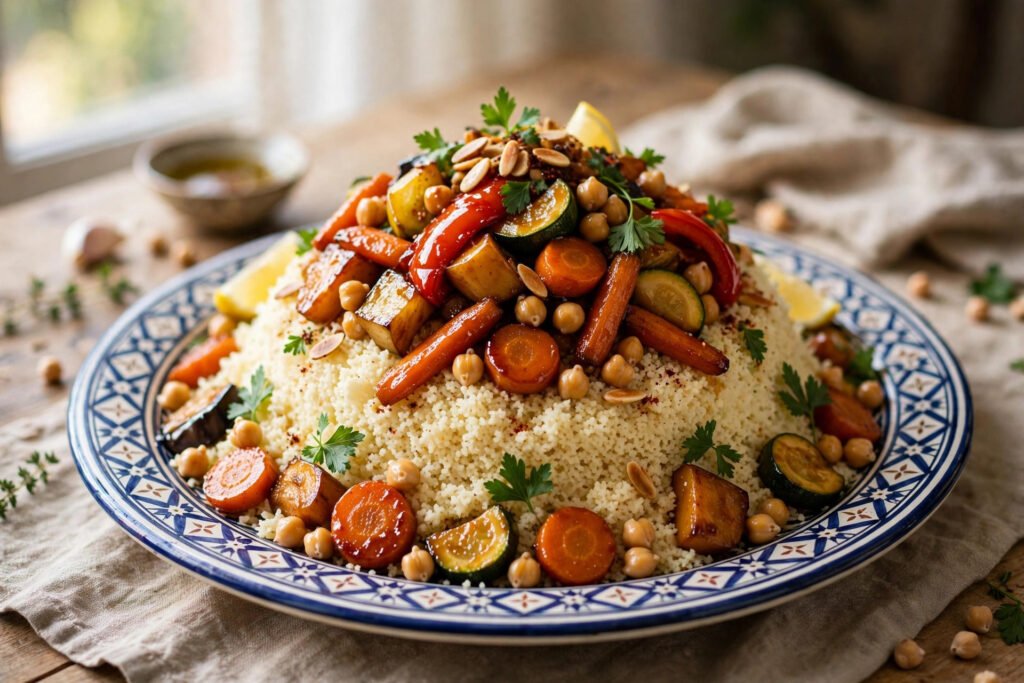
In Morocco, Friday means couscous. Families gather around one big platter of it — grains steamed three times over a fragrant broth until every single one is separate, tender, and fluffy, then mounded into a dome and crowned with vegetables and chickpeas. It is the country’s most beloved dish, and the ritual of making it is half the pleasure.
If your only experience is the 5-minute instant kind, this will be a revelation. Couscous that is boiled (or drowned in water and covered) turns dense and gummy. Couscous that is steamed, the Moroccan way, is light as air — each grain distinct, swollen with spiced broth flavor. The method takes longer, but most of it is hands-off, and you don’t need a special pot: a steamer basket or colander set over your broth pot works perfectly.
This is the classic vegetable version served in homes across Morocco. Once you master the steaming rhythm — steam, rake, sprinkle, repeat — you’ll never go back.
Want the full spread? Our Moroccan Chicken Tagine is the dish most often served at the same Moroccan table, and for celebrations, Djaj Mhamer — the bronzed celebration chicken — is the centerpiece to pair with it.
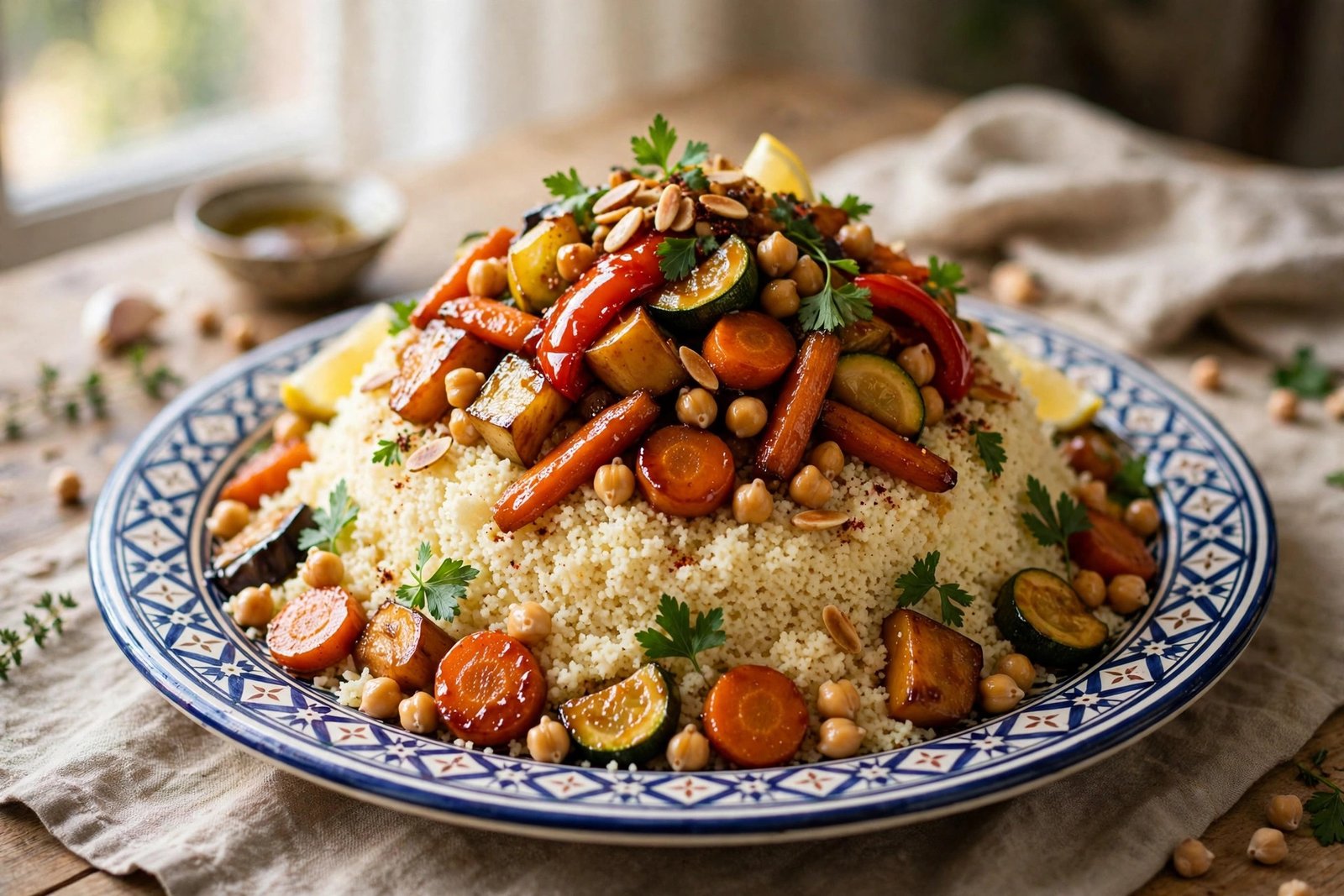
Authentic Moroccan Couscous with Vegetables – Steamed the Traditional Way (3 Steams!)
Ingredients
Method
- Start the broth. In a large pot (the base of your couscoussier, if you have one), combine the olive oil, onion, tomatoes, ginger, turmeric, pepper, salt, herb bundle, chickpeas, and water. Bring to a boil, then reduce to a steady simmer.
- Add the vegetables in stages. Add the carrots, turnips, and cabbage first — they need the longest cooking. Simmer 20 minutes, then add the zucchini and pumpkin, which cook faster. Keep everything at a gentle simmer while you steam the couscous above it.
- First steam. Tip the dry couscous into a wide, shallow bowl. Drizzle over 1 cup of the salted water and rub the grains between your palms, lifting and dropping them, until every grain is damp and there are no clumps. Let rest 5 minutes to swell. Loosen the grains again, pile them into the steamer basket set over the simmering broth, and steam, uncovered, for 15 minutes — until you see steam rising up through the grains.
- Second steam. Turn the couscous back into the bowl. Sprinkle over ¾ cup salted water and rake through with a fork (it’s hot — Moroccan cooks use their hands; a fork or whisk is fine), breaking up every clump and fluffing the grains. Rest 5 minutes, then return to the steamer for another 15 minutes.
- Third steam. Repeat once more with the remaining water and the olive oil worked through the grains. Steam a final 10–15 minutes, until the grains are tender, separate, and fluffy.
- Finish the grains. Tip the couscous into the bowl one last time and work in the butter or smen with your hands or a fork, fluffing as you go. Taste and add salt if needed.
- Serve the Moroccan way. Mound the couscous into a high dome on a wide serving platter. Make a shallow well in the center and arrange the vegetables and chickpeas over the top in an attractive pattern. Ladle a little broth over everything to moisten, and serve the remaining broth in a bowl alongside so each person can add more.
Notes
Ingredient notes
Couscous: Look for medium-grain semolina couscous. Dari is the classic Moroccan brand — find it in Mediterranean markets or online; Bob’s Red Mill and similar medium-grain couscous also work. Avoid pearl (Israeli) couscous, which is a different pasta entirely, and avoid instant couscous for this method. Smen is Morocco’s aged, fermented butter, used in small amounts for finishing; a teaspoon stirred in gives an unmistakable depth. Ghee or good regular butter is the easy substitute, or finish with olive oil alone. A two-part couscoussier is the traditional pot, but a metal colander or steamer basket over your broth pot does the same job — see the tips for sealing the gap.
Tips for Perfectly Fluffy Couscous
- Never boil the couscous in liquid. Steaming is the entire point of this recipe. The moment couscous sits in boiling water it turns heavy and pasty — steamed grains stay separate and light.
- Roll, don’t stir. Rubbing the grains between your palms (or raking with a fork) after each watering is what keeps them individual. Skipping this step is how you get lumps.
- Seal the steamer gap. If steam escapes around the sides of your colander instead of passing through the grains, wrap a damp strip of cloth or a band of foil around the joint between pot and steamer. The couscous should be steaming visibly from the top.
- Season in layers. Lightly salting each addition of water seasons the grains all the way through instead of leaving them bland inside and salty outside.
- Respect the vegetable order. Dense vegetables (carrots, turnips, cabbage) need 40+ minutes; zucchini and pumpkin need 15–20. Everything added at once means mushy zucchini next to crunchy carrots.
Storage & Reheating
- Refrigerator: Store couscous and the broth with vegetables in separate airtight containers for up to 4 days.
- Reheating: The best way is to re-steam the couscous over boiling water for 5–10 minutes until hot and fluffy again. In the microwave, cover it, sprinkle with a tablespoon or two of water, heat in bursts, and fluff well with a fork.
- Freezer: The broth and vegetables freeze well for up to 3 months. Couscous can be frozen, but it’s noticeably better freshly steamed — if you freeze it, re-steam from thawed for the best texture.
FAQ
Can I make Moroccan couscous with meat?
Absolutely — lamb or beef chunks and chicken are both classic. Brown about 2 lbs of meat in the pot before adding the water, onion, and tomatoes, then proceed as written; the meat simmers in the broth while the couscous steams and gets arranged in the center of the dome under the vegetables.
Can I use instant couscous to save time?
You can, but the texture won’t be the same — instant couscous can’t take three steamings and will come out softer. If you do take the shortcut, use hot broth instead of water for the liquid so you still get the flavor, and consider steaming just once for a slightly better texture.
Is couscous gluten-free?
No. Couscous is made from semolina, which is wheat, so it is not suitable for a gluten-free diet. For the closest experience with the same vegetables and broth, serve the broth over cooked quinoa — different, but delicious in its own right.