Ingredients
Method
- Start the broth. In a large pot (the base of your couscoussier, if you have one), combine the olive oil, onion, tomatoes, ginger, turmeric, pepper, salt, herb bundle, chickpeas, and water. Bring to a boil, then reduce to a steady simmer.
- Add the vegetables in stages. Add the carrots, turnips, and cabbage first — they need the longest cooking. Simmer 20 minutes, then add the zucchini and pumpkin, which cook faster. Keep everything at a gentle simmer while you steam the couscous above it.
- First steam. Tip the dry couscous into a wide, shallow bowl. Drizzle over 1 cup of the salted water and rub the grains between your palms, lifting and dropping them, until every grain is damp and there are no clumps. Let rest 5 minutes to swell. Loosen the grains again, pile them into the steamer basket set over the simmering broth, and steam, uncovered, for 15 minutes — until you see steam rising up through the grains.
- Second steam. Turn the couscous back into the bowl. Sprinkle over ¾ cup salted water and rake through with a fork (it’s hot — Moroccan cooks use their hands; a fork or whisk is fine), breaking up every clump and fluffing the grains. Rest 5 minutes, then return to the steamer for another 15 minutes.
- Third steam. Repeat once more with the remaining water and the olive oil worked through the grains. Steam a final 10–15 minutes, until the grains are tender, separate, and fluffy.
- Finish the grains. Tip the couscous into the bowl one last time and work in the butter or smen with your hands or a fork, fluffing as you go. Taste and add salt if needed.
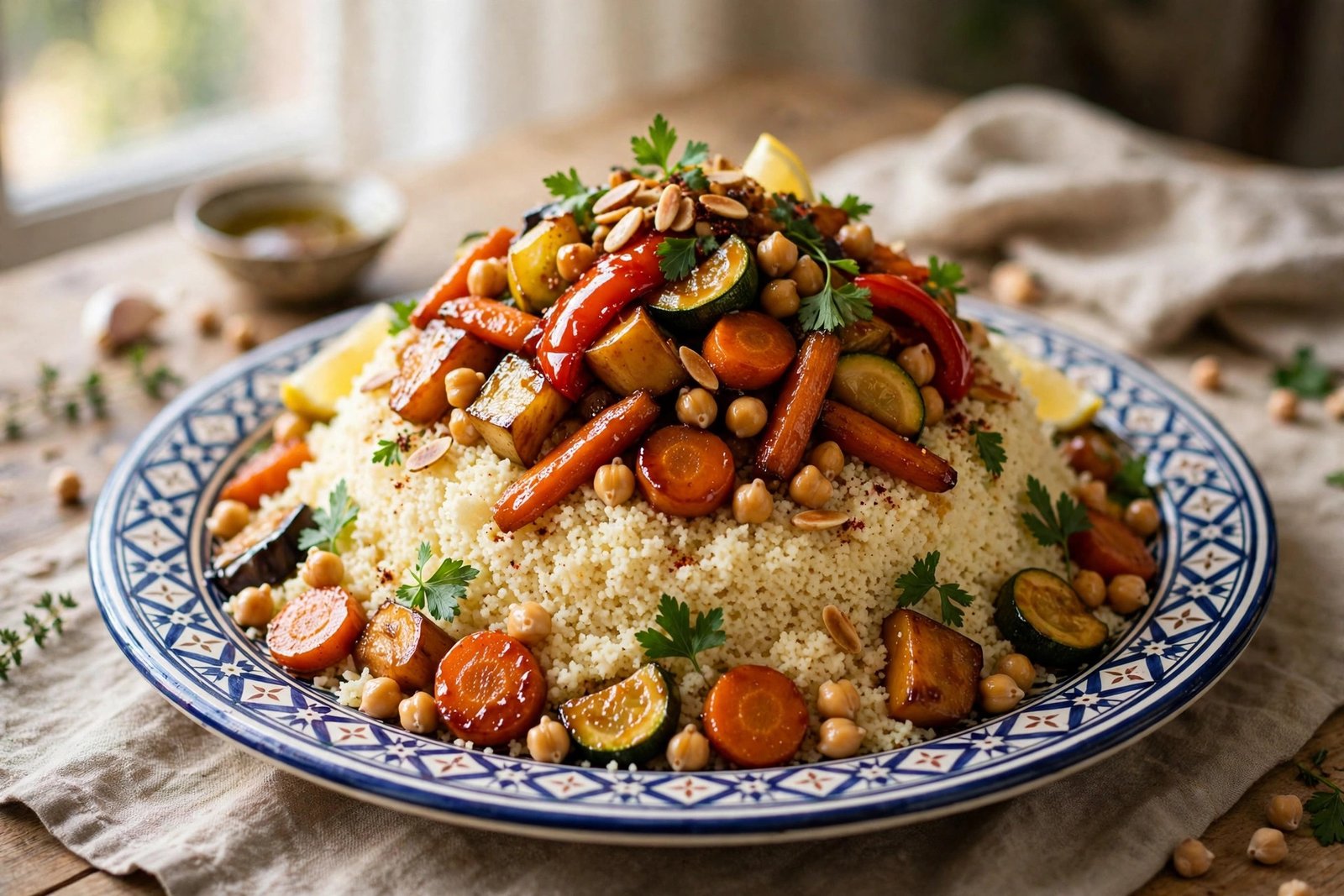
- Serve the Moroccan way. Mound the couscous into a high dome on a wide serving platter. Make a shallow well in the center and arrange the vegetables and chickpeas over the top in an attractive pattern. Ladle a little broth over everything to moisten, and serve the remaining broth in a bowl alongside so each person can add more.
Notes
Never boil the couscous in liquid. Steaming is the entire point of this recipe. The moment couscous sits in boiling water it turns heavy and pasty — steamed grains stay separate and light.