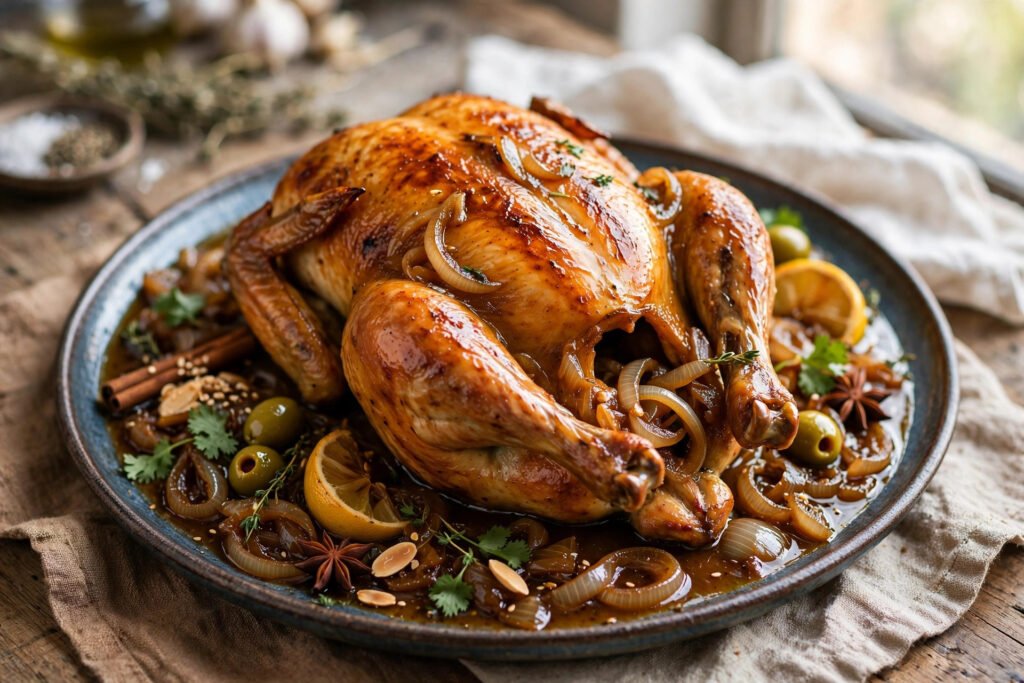
This is Morocco’s celebration chicken — the dish that shows up at weddings, Eid tables, and dinners where the guest really matters. Djaj mhamer is a whole chicken marinated in chermoula (the famous Moroccan herb-and-spice marinade), simmered gently with onions until fall-apart tender, then roasted at the end until its skin turns a deep, burnished mahogany. It is served swimming in daghmira, the thick, sweet, caramelized onion sauce that everyone at the table quietly competes for.
The two-stage method is what makes it extraordinary. Simmering in the marinade cooks the chicken all the way through with flavor and produces the legendary sauce; the final roast is just for that bronzed, crisp-edged skin. Most of the time is hands-off, and the result tastes like you worked far harder than you did.
If you’ve only ever had plain roast chicken, prepare to recalibrate. This is roast chicken with a sauce people write home about.
Building the rest of the menu? Our Moroccan Couscous is the classic side for a celebration spread like this, and our Kefta Tagine is the one to cook when it’s tagine night instead.
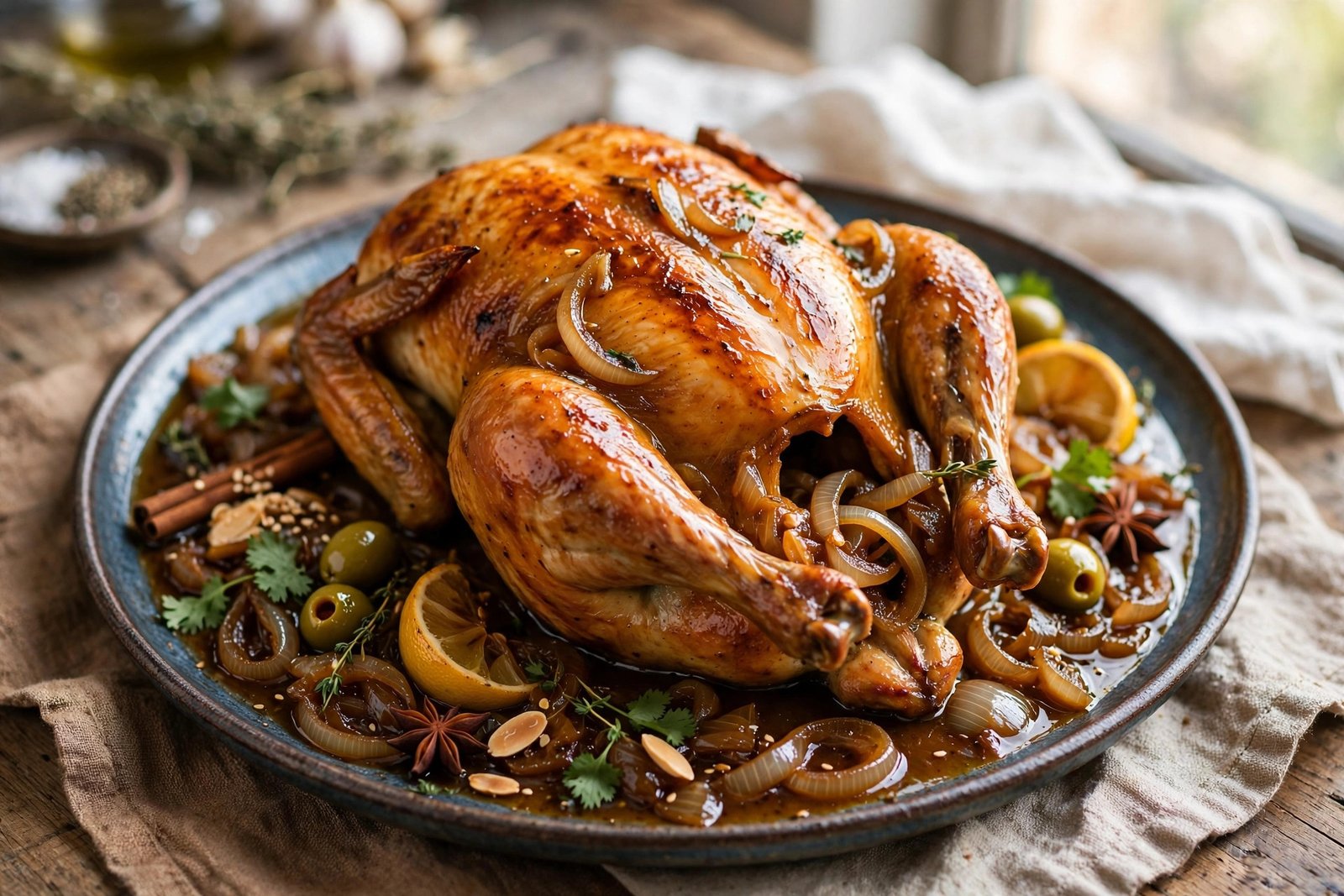
Djaj Mhamer – Moroccan Roasted Chicken with Chermoula & Golden Onion Sauce
Ingredients
Method
- Make the chermoula. Stir all the marinade ingredients together in a bowl until you have a thick, fragrant, deep-green paste. It should smell intensely herby and garlicky — that’s correct.
- Marinate the chicken. Gently loosen the skin over the breast and legs with your fingers. Rub chermoula under the skin, inside the cavity, and all over the outside. Tie the legs together with kitchen twine so the bird holds its shape. Cover and refrigerate at least 2 hours, ideally overnight. (In a hurry, 30 minutes at room temperature still gives good flavor.)
- Simmer until tender. Place the grated onions, butter, water, and any leftover marinade in a large pot or Dutch oven. Set the chicken in, breast side up. Bring to a gentle simmer, cover, and cook 45–50 minutes, turning the bird once very carefully, until the thigh reads 165°F and the leg moves easily in its joint.
- Make the daghmira. Lift the chicken out onto a roasting pan and set aside. Simmer the onion sauce, uncovered, for 10–15 minutes, stirring often, until it becomes very thick, dark golden, and the oil rises and separates on the surface. This transformation — from pale onion liquid to rich daghmira — is the heart of the dish. Don’t stop early.
- Roast to bronze. Heat the oven to 425°F. Pat the chicken’s surface dry, then brush it with the soft butter mixed with a spoonful of the sauce. Roast 12–18 minutes, until the skin is deep golden-brown and crisp at the edges. (A few minutes under the broiler at the end gets you even darker color — watch it constantly.)
- Rest. Let the chicken rest 10 minutes so the juices settle before carving.
- Serve. Spoon a generous bed of daghmira onto a warm platter, set the chicken on top, and scatter over the olives and preserved lemon rind strips. Carve at the table if you like. Crusty bread or a pile of fries alongside is the classic Moroccan serving.
Notes
Ingredient notes
Preserved lemon does double duty here: the soft pulp goes into the chermoula, and the rind becomes the garnish. Find preserved lemons in the international aisle or olive bar at stores like Whole Foods, at Mediterranean or Middle Eastern markets, or online (Mina and Belazu are dependable brands). Substitute with the juice and zest of 1 fresh lemon plus an extra pinch of salt — brighter, but good. Smen, Morocco’s aged butter, adds a deep savory note; ghee or regular butter is the standard substitute. The saffron is optional and lovely, but the paprika and turmeric already give the dish its golden color.
Tips for Celebration-Worthy Djaj Mhamer
- Marinate overnight whenever you can. Chermoula needs time to travel under the skin and into the meat. An overnight rest is the single easiest upgrade to this recipe.
- Simmer, never boil. A rolling boil makes the meat stringy and can break the chicken apart before it ever reaches the oven. A lazy, gentle bubble is what you want for the full simmering time.
- Judge the sauce by the oil. Daghmira is done when the sauce is thick enough to hold a spoon trail and the oil visibly rises to the surface. If it’s still pale and watery, keep reducing — this is not a step to rush.
- Dry skin + butter = the mhamer color. The deep reddish-gold finish comes from patting the simmered chicken dry and brushing it with butter before the hot roast. A wet bird steams instead of bronzing.
- Guard the leftover sauce. Any daghmira left in the pot keeps for days and is extraordinary spooned over rice, eggs, or plain bread the next morning. Cooks have been known to hide it.
Storage & Reheating
- Refrigerator: Store the chicken in its sauce in an airtight container for up to 3–4 days.
- Reheating: Warm, covered, in a 325°F oven with the sauce spooned over the top, until heated through. The sauce protects the meat from drying out.
- Freezer: Freeze chicken portions in their sauce for up to 3 months. Thaw overnight in the refrigerator and reheat as above.
FAQ
Can I skip the simmering and just roast the chicken?
You can — marinate as written, then roast at 375°F for about 1 hour 15 minutes, until the thigh reaches 165°F. It’s a good roast chicken, but you’ll have no daghmira, and the sauce is the whole point of djaj mhamer. The two-step method is the authentic one, and most of it is hands-off.
What does “djaj mhamer” actually mean?
“Djaj” is chicken, and “mhamer” means roasted until reddened or bronzed — it describes exactly what happens in the final step, when the pale simmered bird comes out of the oven deep golden-brown.
Can I use chicken pieces instead of a whole chicken?
Yes, thighs are especially good. Use about 3½ lbs of bone-in, skin-on thighs, marinate the same way, simmer for about 30 minutes, then reduce the sauce and roast the pieces for 10–12 minutes to bronze them.