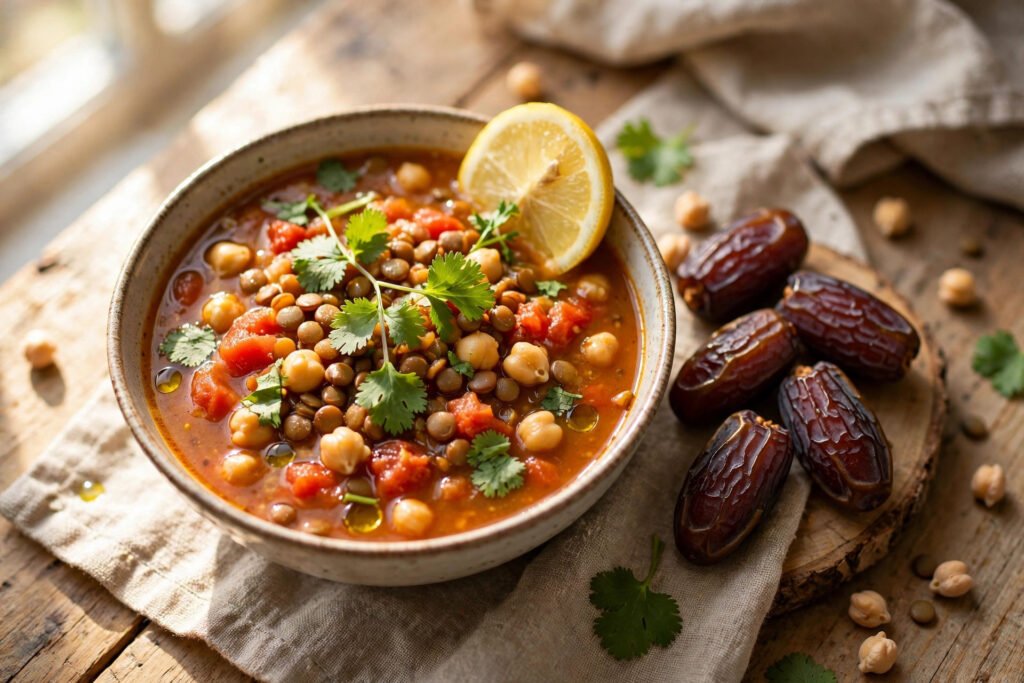
Harira is Morocco’s most beloved soup — the one that breaks the fast at tables all across the country every night of Ramadan, and the one families happily eat all year long. It is tomatoey and deeply herby, gently warmed with ginger and cinnamon, and made substantial with lentils, chickpeas, and small cubes of beef or lamb. Its texture is the signature: not brothy, not heavy, but silky — thanks to a traditional flour slurry called tedouira that Moroccan cooks stir in at the end.
This is a soup with presence. Fresh cilantro and parsley go in by the cupful, in two additions, so it tastes green and alive rather than like plain tomato soup. A squeeze of lemon at the table wakes everything up, and during Ramadan it’s classically served with sweet dates alongside — a bite of date, a spoonful of soup, and you’ll understand immediately.
Make a big pot. Harira is famously better on the second day, and it freezes like a dream.
Making it a full Moroccan spread? Serve this soup ahead of our Moroccan Couscous on a Friday, or follow it with our Kefta Tagine — soup first, tagine second is how many Moroccan tables do it.
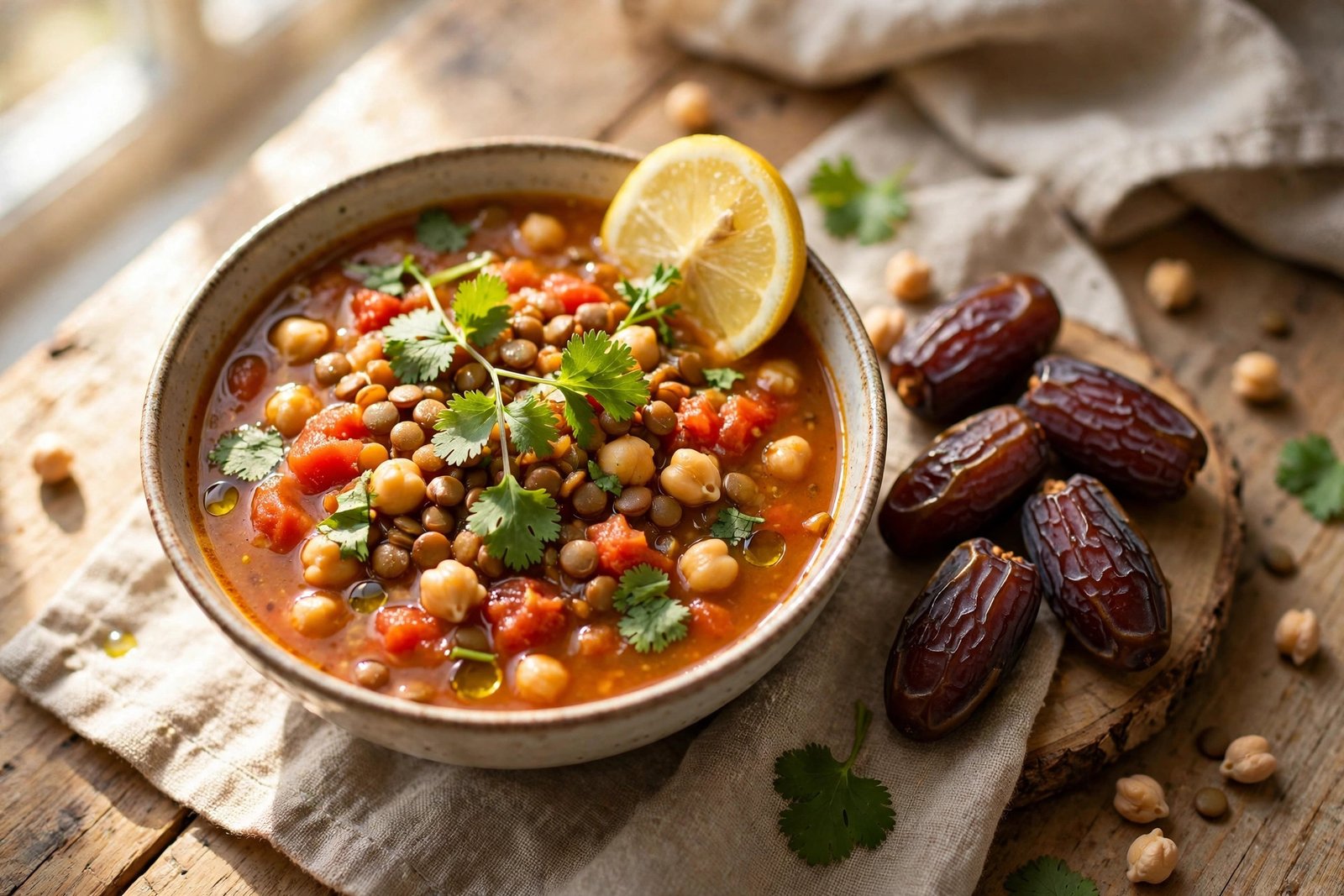
Harira – Authentic Moroccan Tomato, Lentil & Chickpea Soup
Ingredients
Method
- Start the base. Heat the olive oil in a large pot or Dutch oven over medium heat. If using meat, add the cubes and brown them lightly on all sides, about 5 minutes. Add the onion and celery and cook 5 minutes more, until softened.
- Bloom the spices and tomatoes. Stir in the ginger, pepper, turmeric, cinnamon, and salt for 30 seconds. Add the crushed tomatoes and tomato paste and cook, stirring, for about 5 minutes, until the mixture darkens slightly and smells rich.
- Add legumes and water. Stir in the lentils, chickpeas, and water. Bring to a boil, skim off any foam, then reduce to a steady simmer. Cover and cook for about 40 minutes, until the lentils are tender and the meat is cooked through. (If using canned chickpeas, add them for only the final 20 minutes.)
- First herb addition. Stir in half of the cilantro and half of the parsley. Simmer 10 minutes so their flavor cooks into the body of the soup.
- Stir in the tedouira — slowly. Whisk the flour and water together until completely smooth, with no lumps. Pour it into the simmering soup in a thin, steady stream, stirring constantly as you pour. Keep stirring and simmering for 8–10 minutes, until the soup turns silky and lightly thickened — it should coat the back of a spoon but still pour easily.
- Finish fresh. Stir in the remaining cilantro and parsley and a squeeze of lemon juice. Taste and adjust salt and pepper. Rest the soup off the heat for 5 minutes; it will thicken a touch more as it stands.
- Serve. Ladle into bowls and pass lemon wedges at the table. During Ramadan, serve with dates (and chebakia, Morocco’s sesame-honey cookies) alongside; any other time of year, crusty bread is all you need.
Notes
Ingredient notes
Chickpeas: Dried chickpeas, soaked overnight, are the traditional choice and give the firmest, nuttiest result — if you use them, add them at the start as written but give the soup an extra 20 minutes of simmering before the lentils go in (or pressure-cook the chickpeas separately). A drained can of chickpeas is a completely respectable weeknight shortcut; add canned chickpeas in the last 20 minutes so they don’t turn mushy. Celery leaves are not a garnish here — chopped fine with the stalks, they’re part of harira’s unmistakable flavor, so don’t trim them away. No specialty ingredients are needed beyond what’s listed; everything is available in a regular US supermarket.
Tips for Harira with Real Depth
- Split the herbs, always. Herbs cooked into the soup give depth; the final raw handful gives freshness. Using a full cup each of cilantro and parsley sounds like a lot until you taste it — this soup is supposed to taste herby, not just tomatoey.
- The tedouira technique matters. Flour slurry dumped in all at once makes lumps that no amount of stirring fully fixes. A thin stream into actively simmering soup, with constant stirring, is the whole trick — and keep it simmering the full 8–10 minutes so the flour cooks out and doesn’t taste raw.
- Harira thickens as it sits. By day two it can set up almost like a stew. When reheating, add water a splash at a time, stirring, until it’s pourable again — and re-check the salt after thinning.
- Make it a day ahead on purpose. Of all the recipes in this series, this is the one that most rewards planning. The flavors marry overnight and the second-day bowl is the one Moroccans quietly consider the best.
- Skim early, relax later. A quick skim after the first boil keeps the soup’s flavor clean. After that, harira asks for nothing but an occasional stir.
Storage & Reheating
- Refrigerator: Keeps beautifully for 4–5 days in an airtight container — the longest-lived soup in this series.
- Reheating: Warm gently on the stovetop, adding water a little at a time to restore the silky consistency, and finish with a squeeze of fresh lemon to brighten it back up.
- Freezer: Freeze for up to 3 months. Thaw overnight in the refrigerator, reheat as above, and stir in a small handful of fresh herbs at the end if you have them.
FAQ
Is harira always made with meat?
No. Beef or lamb is classic, but plenty of Moroccan families make harira without meat — especially for a lighter iftar — and the soup is completely satisfying either way, since the chickpeas and lentils carry it. To make it vegetarian, simply skip the meat and proceed; for a vegan version, that’s the only change needed.
Can I make harira in an Instant Pot?
Yes. Use Sauté for steps 1–2, then add the legumes and water (dried soaked chickpeas work here without pre-cooking) and pressure cook on High for 18 minutes with a 10-minute natural release. Stir in the tedouira on Sauté mode and simmer, stirring, for 5 minutes to finish.
Can I skip the flour tedouira?
You can, but the soup will be a thinner, brothier version of harira. For body without flour, blend a ladleful of the finished soup until smooth and stir it back in — it thickens the pot naturally. A cornstarch slurry (1½ tablespoons cornstarch in cold water) also works in a pinch, though flour is the traditional choice and gives a rounder flavor.